Europe and Latin America redefine their energy alliance in the development of green hydrogen
As Europe accelerates its decarbonization and moves to reduce dependence on Russian gas, green hydrogen has become central to its energy security strategy—creating a pivotal opportunity for Latin America as a strategic supply partner. With unmatched solar and wind resources, countries such as Chile and Brazil are positioning themselves as major producers and exporters, supported by more than 70 announced projects and over USD 50 billion in investments aligned with the EU’s target to import 10 million tonnes of renewable hydrogen by 2030. While Colombia, Uruguay, and Argentina are also advancing national hydrogen initiatives, the main challenge remains transatlantic transport, with green ammonia, green methanol, and liquid hydrogen emerging as competing carriers. The sector now faces a critical test: without long-term offtake agreements and clear European port and infrastructure strategies, many projects risk missing final investment decisions. Beyond volumes and trade, the long-term success of the Euro–Latin American hydrogen partnership will depend on avoiding extractive models and instead building shared value chains that enable technology transfer, industrial development, and skilled employment on both sides of the Atlantic.
U.S. Green Hydrogen Cuts Give China an Edge in the Clean Energy Race
The United States’ ambition to lead the global green hydrogen market is losing momentum as recent policy shifts under the Trump administration reduce funding for hydrogen hubs and scale back key tax incentives, marking a departure from the investment-driven approach of the Inflation Reduction Act. Cuts and delays affecting more than USD 7 billion in federal support have forced developers to reassess large-scale projects, while uncertainty around the Section 45V hydrogen tax credit threatens to push U.S. production costs above global competitors. This slowdown contrasts sharply with China’s rapid advance, as it dominates electrolyser manufacturing, expands domestic green hydrogen capacity, and benefits from significantly lower equipment costs. Analysts warn that without stable policy support, the U.S. risks ceding technological and industrial leadership to China in a market projected to exceed USD 500 billion annually by mid-century, potentially turning the U.S. from a hydrogen leader into a technology importer rather than a global competitor.
Link: https://carboncredits.com/us-hydrogen-cuts-give-china-an-edge-in-the-clean-green-energy-race/
Chile inaugurates the first hydrogen locomotive in Latin America
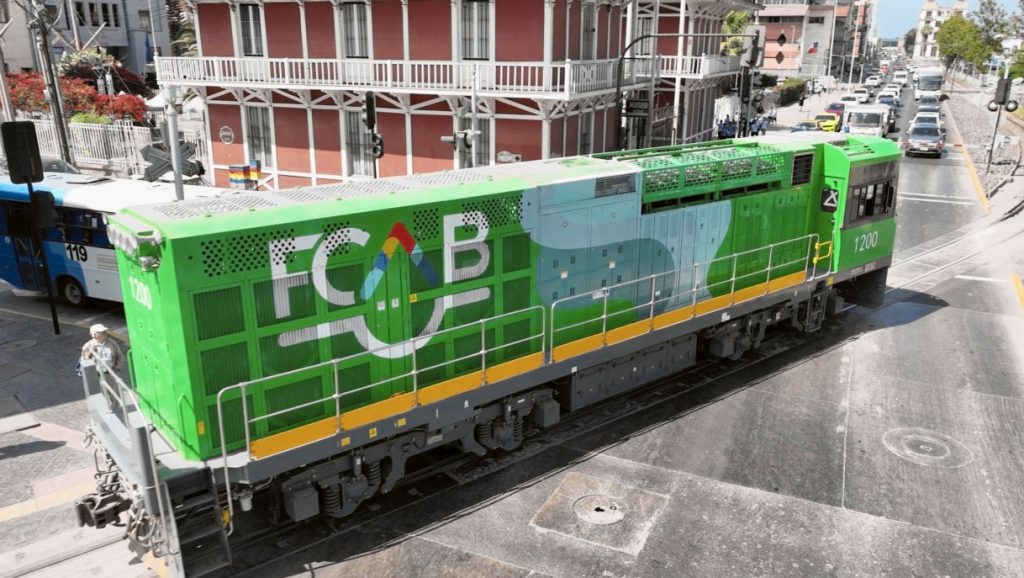
Chile has marked a milestone in hydrogen-powered rail transport as a hydrogen shunting locomotive supplied by CRRC completed its first commercial run on November 20 in Antofagasta. Ordered by private railway operator FCAB in 2022, the locomotive operates on a 1,000 mm gauge and features hybrid traction combining a 400 kW hydrogen fuel cell with 600 kW batteries, enabling the haulage of 1,000-ton trains over distances of up to 400 km. The project includes a dedicated high-pressure hydrogen refuelling station and a storage capacity of 184 kg of hydrogen, with the locomotive engineered to withstand harsh coastal and desert conditions. FCAB describes the deployment as the first hydrogen-powered rolling stock on the continent, supporting its long-term strategy to transition toward fully diesel-free rail operations.
ZEMU Enters Service as North America’s First Hydrogen Passenger Train, Marking Milestone for U.S. Rail Decarbonisation
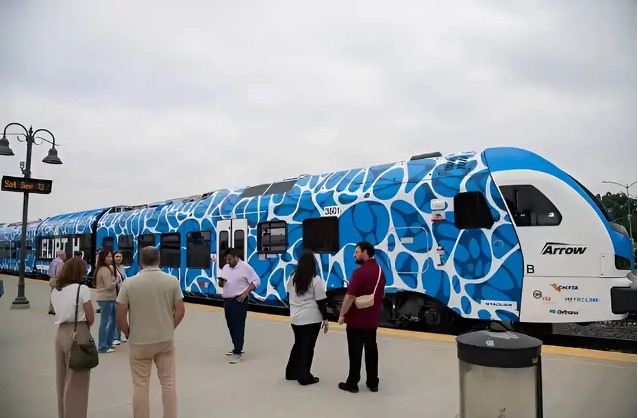
North America’s first hydrogen-powered passenger train has entered full commercial service in California, with the San Bernardino County Transportation Authority launching the Stadler-built Zero Emission Multiple Unit (ZEMU) on the San Bernardino–Redlands Arrow Corridor. The hydrogen fuel cell–battery hybrid train operates up to 16 daily trips along the nine-mile route, emitting only water vapor while delivering a range of up to 380 miles and a top speed of 79 mph. Built on Stadler’s FLIRT platform and fully compliant with Federal Railroad Administration regulations, ZEMU eliminates the need for overhead electrification by using a self-contained hydrogen-battery power system. Recognised by California’s State Transportation Agency as a national model, the project establishes a blueprint for future hydrogen rail corridors and positions SBCTA as an early leader in zero-emission rail transit in North America.
Green hydrogen in action: South America launches its first emissions-free ship ahead of COP30 in Brazil
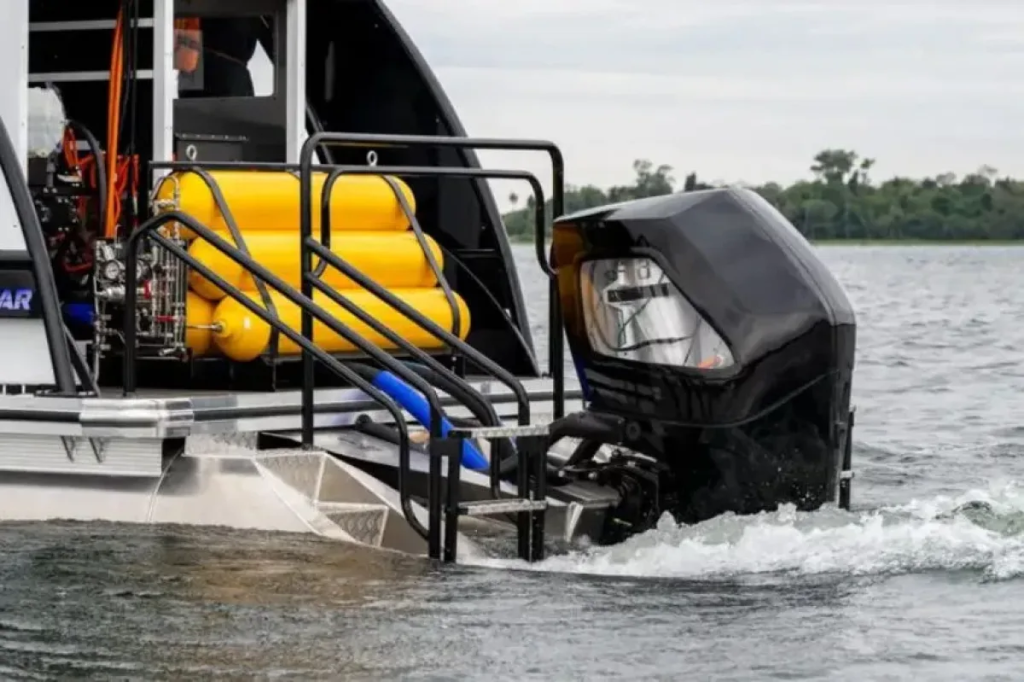
South America has reached a landmark in clean transport with the launch of its first river vessel powered entirely by green hydrogen, developed by Itaipú Binacional through its innovation center. Presented on the Itaipú reservoir at the Brazil–Paraguay border and set to debut officially at COP30 in Belém, the vessel represents both a technological breakthrough and a practical application of sustainability. Built from recyclable aluminum and powered by hydrogen produced via renewable-powered electrolysis, the ship operates with zero emissions and will be used to collect solid waste from river islands, improving water quality and supporting riverside communities. The project highlights the potential of green hydrogen to decarbonize inland navigation, integrate environmental and social objectives, and position South America as an emerging leader in clean energy innovation.
Electric hydrogen expands into Latin America
Electric Hydrogen has announced its expansion into Latin America with the appointment of Maria Gabriela da Rocha Oliveira as Country Manager, based in Brazil, to lead regional commercial and partnership strategies. The move comes as Brazil and neighboring countries accelerate plans to reduce fossil fuel dependence and scale green hydrogen production. Electric Hydrogen’s HYPRPlant technology—an industrial-scale, low-cost electrolyser system based on proprietary PEM technology and factory-fabricated modular skids—enables rapid deployment of cost-competitive, fossil-free hydrogen and has already been selected for major global projects. The company aims to support GW-scale hydrogen developments across Latin America, focusing on domestic production of green fertilizers, e-fuels, and industrial decarbonization. With over 15 years of experience in renewable energy and carbon strategy, da Rocha Oliveira is expected to play a key role in unlocking Latin America’s strong economic potential for large-scale green hydrogen enabled by abundant renewables and growing industrial demand.
Link: https://www.worldfertilizer.com/environment/08122025/electric-hydrogen-expands-into-latin-america/
America runs on gas, Japan on hydrogen ― India is harvesting power from air with this device
While the United States and Japan continue to pursue energy strategies that combine clean technologies with ongoing reliance on fossil fuels and hydrogen infrastructure, India is charting a distinct path through the development of zinc–air battery technology that generates electricity by reacting zinc with oxygen from ambient air. Developed by researchers at the Indian Institute of Science, the device offers a low-cost, scalable approach to clean energy generation and storage, with additional benefits including environmentally benign hydrogen peroxide production and potential applications in water treatment. Unlike capital-intensive gas pipelines or hydrogen systems, zinc–air batteries are relatively simple to manufacture and rely on abundant materials, reinforcing India’s long-term commitment to clean energy over fossil fuels. While widespread deployment and short-term competitiveness remain uncertain, the technology highlights an alternative clean energy trajectory that could play a significant role in future energy systems focused on sustainability, affordability, and multifunctional environmental benefits.
Link: https://www.ecoticias.com/en/america-gas-japan-india-air-this-device/23476/
From the Arctic to the Amazon: Exploring Nordic-South American Collaboration on Clean Hydrogen
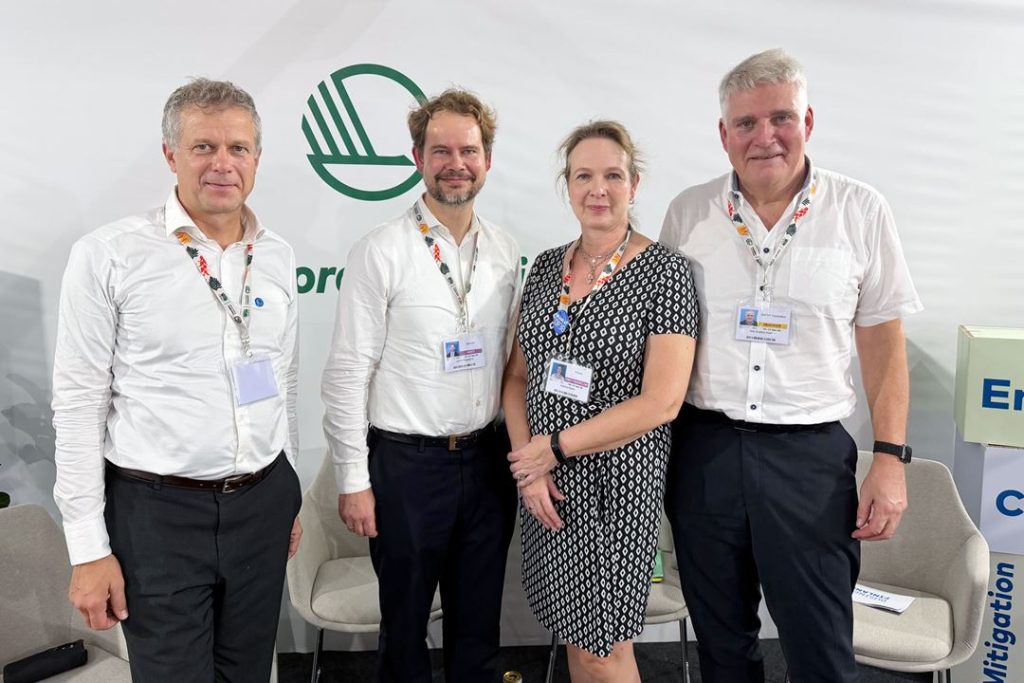
Despite their geographic distance, the Nordic countries and South America share strikingly similar opportunities and constraints in scaling clean hydrogen for deep decarbonisation. Discussions at COP30 in Belém highlighted hydrogen’s critical role in decarbonising hard-to-electrify sectors such as maritime transport and heavy industry, while underscoring that progress remains slow: only a marginal fraction of announced clean hydrogen capacity in both regions has reached operation or construction. Speakers from SINTEF, Nordic Energy Research, and regional authorities emphasised that high costs, uncertain demand, and fragmented value chains remain the primary barriers. Transregional “hydrogen valleys” were identified as a key solution, aligning production, infrastructure, and end-use within integrated ecosystems and potentially extending across borders or even the Atlantic. Existing initiatives—such as Nordic hydrogen valleys and emerging Norway–Brazil green shipping corridors—demonstrate how coordinated research, policy, and industry action can unlock scale. However, participants stressed that success now depends on moving decisively from announcements to implementation, with stronger bilateral cooperation, long-term offtake frameworks, and technology-neutral collaboration to accelerate the global clean hydrogen market.
Air Liquide strengthens its U.S. Gulf Coast footprint and invests 50 million USD to support new long-term hydrogen supply agreements
Air Liquide is strengthening its U.S. Gulf Coast hydrogen network through nearly $50 million in targeted investments, following the signing of new long-term hydrogen supply agreements with two of the largest U.S. refiners. The strategy focuses on optimizing and upgrading existing pipeline, compression, and distribution infrastructure rather than pursuing capital-intensive greenfield developments. Leveraging its established assets—including ownership of the world’s largest hydrogen storage cavern in Spindletop, Texas—Air Liquide is uniquely positioned to scale supply rapidly and reliably for large industrial customers. The move reinforces the Group’s leadership in the U.S. hydrogen market, supports growing industrial demand, and aligns with its broader strategy of maximizing efficiency, flexibility, and resilience in hydrogen production and distribution.
Air Liquide bullish on US blue hydrogen prospects
Air Liquide has welcomed recent U.S. legislative changes affecting blue hydrogen development, with the company highlighting increased regulatory clarity following the passage of the One Big Beautiful Bill Act on 4 July. Speaking on an earnings call, Air Liquide North America CEO Adam Peters said the law removes a key source of uncertainty for developers by accelerating the start-of-construction deadline for the Section 45V clean hydrogen production tax credit—worth up to $3/kg—to end-2027, from the previous 2033 timeline. The shift is expected to push earlier investment decisions and construction activity, particularly benefiting blue hydrogen projects that rely on clear fiscal and regulatory signals to reach a final investment decision.
Link: https://www.gasworld.com/story/air-liquide-bullish-on-us-blue-hydrogen-prospects/2167747.article/
American AI Expert to Partner with HUI in Gulf States
Hydrogen Utopia International (HUI) has entered into a Binding Outline Agreement with BPODash LLC, a U.S.-based developer of AI-driven monitoring and predictive analytics platforms for industrial operations. Under the proposed agreement, HUI would receive exclusive rights to integrate BPODash’s technology into its waste-to-hydrogen projects across the Middle East and North Africa (MENA), subject to execution of a definitive agreement within 180 days.
BPODash’s cloud-based platform consolidates operational and business data across entire facilities, enabling real-time oversight, predictive performance modelling, and 24/7 monitoring tailored to complex renewable and waste-to-energy environments. The integration is expected to transform HUI’s plants into digitally optimised, AI-enabled hydrogen facilities, improving efficiency, reducing downtime, and supporting HUI’s cost-reduction target of hydrogen production below $2/kg.
The partnership highlights the growing intersection between AI, energy demand, and clean hydrogen, positioning hydrogen as a key enabler of the digital economy’s expansion without increasing carbon emissions. By combining waste-to-hydrogen conversion with AI-driven plant intelligence, HUI aims to demonstrate a scalable, resilient model for sustainable hydrogen production in high-growth markets.
Link: https://investingnews.com/american-ai-expert-to-partner-with-hui-in-gulf-states/
Europe’s turquoise hydrogen boom — 150,000 tonnes a year turned to methanol threaten America
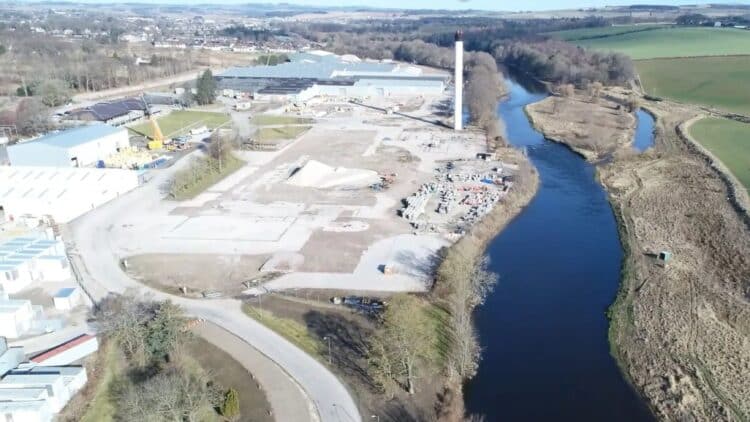
Europe is increasingly betting on turquoise hydrogen as a faster, lower-energy pathway to industrial-scale clean hydrogen, positioning itself ahead in the global hydrogen-to-methanol value chain. Turquoise hydrogen is produced via methane pyrolysis, splitting methane into hydrogen and solid carbon rather than CO₂, placing it between green and blue hydrogen in terms of emissions and cost. European developers argue the process requires as little as ~13% of the energy needed for electrolysis, enabling cheaper and quicker scale-up.
Finland-based Hycamite’s methane-splitting plant in Kokkola, projected to produce 2,000 tonnes of hydrogen and 6,000 tonnes of solid carbon annually, exemplifies this shift. Crucially, Europe is coupling hydrogen production with large-scale methanol synthesis (up to ~150,000 t/y), transforming hydrogen into a transportable, tradable commodity and securing downstream control over chemicals, shipping fuels, and export contracts.
This integrated hydrogen-to-methanol strategy signals Europe’s move beyond pilot projects toward industrial dominance, challenging U.S. leadership where hydrogen production remains largely grey and policy uncertainty persists. By scaling both production and downstream markets, Europe is not only reducing emissions but also shaping future energy trade, industrial competitiveness, and geopolitical influence—raising the stakes for whether the U.S. accelerates investment or risks falling behind in the emerging hydrogen economy.
Link: https://www.eldiario24.com/en/europe-turquoise-hydrogen-fuel-rivalry/24769/
HIF Global Selects Electric Hydrogen’s Advanced American Electrolyzer Technology for Texas e-Fuels Project
HIF Global has selected Electric Hydrogen to supply U.S.-manufactured electrolyzer systems for its Texas e-Fuels facility, marking one of the world’s largest deployments of American-made electrolyzers for industrial-scale e-methanol production. The project positions Texas as a hub for next-generation low-emissions fuels while reinforcing U.S. leadership in advanced energy manufacturing. Electric Hydrogen’s modular, high-power electrolyzers—featuring PEM stacks produced at its Massachusetts gigafactory and balance-of-plant equipment built in Texas—are designed to cut costs and construction timelines at scale. Executives from both companies emphasized the project’s role in strengthening domestic supply chains, supporting U.S. jobs, and demonstrating that American-built hydrogen technologies can compete globally in performance, cost, and scale, at a time when the sector has been dominated by Chinese exports.
StormFisher Hydrogen acquires Recyclage Carbone Varennes to launch North America’s first large-scale low-carbon methanol plant in Varennes
StormFisher Hydrogen has acquired Recyclage Carbone Varennes (RCV) to develop North America’s first large-scale low-carbon methanol plant in Varennes, Québec, marking a major milestone for RFNBO-compliant fuels in the region. Building on RCV’s existing infrastructure and expertise, StormFisher will repurpose the partially developed site to produce low-carbon methanol using clean hydrogen and captured CO₂, replacing the original biomass gasification concept with a simpler, more reliable and lower-risk process. Scheduled to enter operation in 2028, the facility is expected to produce over 72,000 tonnes of low-carbon methanol annually, supplying maritime, aviation, and chemical markets while capturing and reusing more than 100,000 tonnes of CO₂ per year. The project will create around 75 jobs and positions Varennes as a cornerstone of North America’s emerging low-carbon fuels supply chain, supporting both local decarbonization and global clean-fuel demand.
Rep. Jim Costa, Bipartisan Colleagues Recognize 11th Annual Hydrogen and Fuel Cell Day
U.S. lawmakers have introduced a bipartisan resolution designating October 8, 2025, as “National Hydrogen and Fuel Cell Day,” reaffirming congressional support for hydrogen and fuel cell technologies as pillars of America’s clean energy transition. Led by Representatives Jim Costa, John Larson, Paul Tonko, and David Valadao, the resolution highlights hydrogen’s role in cutting emissions, strengthening energy security, creating high-quality jobs, and boosting domestic manufacturing. Lawmakers emphasized hydrogen’s importance for reducing energy costs, supporting regional economies, and maintaining U.S. competitiveness in advanced energy technologies, while industry leaders welcomed the bipartisan backing as a clear signal that hydrogen and fuel cells will play a central role in driving economic growth, innovation, and global leadership in the U.S. energy system.
America’s biggest rollout arrives — A $1 billion hydrogen highway maps a new corridor here
The United States is advancing a billion-dollar “hydrogen highway” strategy aimed at transforming freight transport, heavy industry, and public transit through a nationwide network of clean hydrogen hubs. Backed by the Department of Energy’s $7 billion Clean Hydrogen Hubs program, the initiative focuses on building hydrogen production, storage, pipelines, and refuelling stations along major highways, ports, and industrial corridors. Key regions—including Texas, California, the Midwest, and the Gulf Coast—are positioned to benefit, with projects such as California’s ARCHES hub receiving up to $1.2 billion in federal funding to accelerate deployment. While high costs, permitting, safety, and environmental justice concerns remain challenges, proponents argue the network could cut emissions in hard-to-electrify sectors, create thousands of jobs, and become a cornerstone of the U.S. low-carbon energy system if implemented with strong governance, transparency, and long-term planning.
Link: https://www.eldiario24.com/en/hydrogen-highway-reshapes-america/21963/
Trump’s cuts to billion-dollar hydrogen hubs rattle industry
While China, India, and Gulf states accelerate large-scale green hydrogen investments, the United States risks losing momentum as federal funding for its regional hydrogen hubs comes under threat. The U.S. Department of Energy has already rescinded $2.2 billion in awards to two renewable-only hydrogen hubs (California and the Pacific Northwest) and is reportedly considering cuts to all seven hubs created under the bipartisan Infrastructure Investment and Jobs Act—projects collectively worth $24 billion. Although the fate of all grants remains uncertain, the prospect of cancellations has injected significant policy uncertainty into the sector, undermining private investment confidence at a time when global competitors are scaling rapidly.
Analysts note that U.S. hydrogen deployment was already constrained by low demand, weak market incentives, and limited carbon pricing, especially compared with Europe. While the Inflation Reduction Act’s 45V tax credit remains the most critical support mechanism, its shortened eligibility window further weakens long-term investment certainty. Some states—most notably California—may partially offset federal retrenchment through cap-and-invest revenues and state transport programs, but experts caution that state-level action alone is unlikely to deliver hydrogen at national scale. Overall, industry groups and policy analysts warn that withdrawing federal support could cost jobs, slow innovation, and leave the U.S. trailing in a global hydrogen race increasingly defined by decisive public investment and long-term policy clarity.
Link: https://www.canarymedia.com/articles/hydrogen/hydrogen-hub-cuts-trump-doe-list
California hydrogen hub pauses operations in wake of federal funding cuts
California’s flagship hydrogen initiative ARCHES has paused all activities after the Trump administration cancelled $1.2 billion in federal funding. The project, previously selected as the first U.S. hydrogen hub under the Bipartisan Infrastructure Law, aimed to cut emissions from transport and port operations. The pause highlights how federal policy shifts are directly disrupting hydrogen deployment in the U.S.
Toyota Aims to Bolster US Hydrogen Infrastructure with Investment in FirstElement Fuel
Toyota has announced a strategic investment in FirstElement Fuel, the largest hydrogen fueling network provider in California. The move aims to strengthen U.S. hydrogen refueling infrastructure and support current and future fuel cell electric vehicle (FCEV) adoption.
University of California researchers ask judge to reinstate hydrogen hub funding
U.S. Department of Energy funding cuts have effectively halted California’s flagship hydrogen initiative, ARCHES. University of California researchers are now suing to restore over $1.2 billion in canceled federal funding, arguing the cuts jeopardize a program that had anchored California’s hydrogen industry and unlocked more than $10 billion in private investment.
DOE cancellations hit hydrogen, air capture hubs
The U.S. Department of Energy is canceling more than 300 clean energy grants, totaling over $7.5 billion, originally approved under the Biden administration.
According to a list circulating in Washington, the cuts include two ajör hydrogen hubs, nearly half of direct air capture hub grants, and many smaller projects across multiple DOE offices, though no official list has been released by the Trump administration.
Panel clears PHMSA bill with provisions for CO2, hydrogen pipelines
The U.S. House Transportation and Infrastructure Committee unanimously passed the PIPES Act (H.R. 5301) to reauthorize federal pipeline safety programs, adding drone inspection provisions and rejecting a carbon capture amendment.
The bill aims to renew PHMSA’s authority, last fully authorized in 2020, and advance pipeline safety and innovation after years of stalled reauthorization efforts.
Low-Carbon Ammonia Partnership Powers Louisiana’s Clean Energy Future
Air Products and Yara International are planning a multi-billion-dollar low-carbon ammonia project on Louisiana’s Gulf Coast, combining carbon capture with large-scale hydrogen and ammonia production.
The project could produce ~2.8 million tonnes of low-carbon ammonia per year, capture up to 5 million tonnes of CO₂ annually, create thousands of jobs, and position Louisiana as a major hub for clean industrial fuels aligned with global decarbonization goals.
Link: https://www.hydrogenfuelnews.com/low–carbon-ammonia-partnership-powers-louisianas-clean-energy-future/8574179/