
EU awards over €600 million to alternative fuel projects to boost zero-emission mobility
17 November 2025
Over €600 million in EU funding has been awarded to 70 projects aimed at electrifying and decarbonising transport across the trans-European transport network (TEN-T) in 24 EU countries. The projects will expand alternative fuels infrastructure, including electric vehicle charging stations, hydrogen refuelling stations, airport electrification, and greener technologies in maritime ports.
The investments include more than 3,500 new electric recharging points for light- and heavy-duty vehicles, electrification of ground handling services at 16 European airports, 38 hydrogen refuelling stations, and cleaner port infrastructure such as onshore power supply and ammonia bunkering. These measures are expected to significantly reduce emissions across road, aviation, and maritime transport.
EU officials emphasized that the funding will accelerate the transition to zero-emission mobility and strengthen Europe’s competitiveness. Since 2021, over €2.5 billion in EU grants have been allocated to alternative fuels projects through the Alternative Fuels Infrastructure Facility (AFIF).
Following approval by EU Member States in November 2025, the European Commission will formally adopt the funding decision and begin grant agreements. Due to exhausted funds, the third project cut-off has been cancelled, with a new work programme and call for proposals planned in the coming months.
Commission boosts energy interconnectivity across Europe and beyond by supporting 235 cross-border projects
1 December 2025
The European Commission has designated 235 cross-border energy projects as Projects of Common Interest (PCIs) and Projects of Mutual Interest (PMIs), marking the second such list since 2023. These projects will be eligible for EU funding under the Connecting Europe Facility and will benefit from faster permitting and regulatory procedures to accelerate implementation.
The selected projects aim to strengthen Europe’s energy connectivity, support the completion of the Energy Union, enhance energy security, and advance decarbonisation. They include 113 electricity and smart grid projects, 100 hydrogen and electrolyser projects, 17 carbon transport infrastructure projects, 3 smart gas grid projects, and the continued inclusion of projects linking Malta and Cyprus to the European gas network.
The Commission estimates that nearly €1.5 trillion in energy infrastructure investment will be needed between 2024 and 2040, and these projects are expected to contribute significantly to meeting that demand. The initiative aligns with the EU’s clean energy transition goals and efforts to ensure affordable and reliable energy for households and industry. Next, the project list will be submitted to the European Parliament and the Council for scrutiny under the TEN-E Regulation. Once adopted, the Commission will work closely with Member States and project promoters to ensure rapid and smooth implementation, supported by upcoming initiatives such as the European Grids Package and the Energy Highways initiative.
Link: https://ec.europa.eu/commission/presscorner/detail/en/ip_25_2758
New CINEA publication on hydrogen
29 September 2025
Hydrogen is increasingly recognised as a key pillar of the EU’s Clean Industrial Deal due to its potential to decarbonise hard-to-abate industries, provide long-duration energy storage, and reduce dependence on imported fossil fuels. Despite significant progress, the hydrogen sector continues to face technical, economic, regulatory, market, and environmental challenges.
Through its funded projects, CINEA supports innovation, large-scale demonstration, and the development of enabling infrastructure to address these barriers. These efforts support the EU’s goal of producing 10 million tonnes of renewable hydrogen per year by 2030 and aim to build a resilient and competitive European hydrogen economy.
A newly published overview highlights CINEA’s hydrogen project portfolio, covering 229 projects across Europe with a total EU contribution of €5.6 billion. The projects span local heating, industrial-scale electrolysis, hydrogen energy networks, and clean mobility corridors, showcasing the technical feasibility and climate benefits of hydrogen technologies.
Link: https://cinea.ec.europa.eu/news-events/news/new-cinea-publication-hydrogen-2025-09-29_en
Polish development bank inks deals for €500 million in green hydrogen subsidies
7 October 2025
Poland’s development bank BGK has signed agreements to provide PLN 2.117 billion (around €498 million) in non-repayable funding to five Polish companies for green hydrogen investments with a combined capacity of 343 MW. The funding is provided under Poland’s National Recovery and Resilience Plan through a programme supporting hydrogen technologies, including production, storage, and transport.
The support targets projects developing Renewable Fuels of Non-Biological Origin (RFNBO) or low-emission hydrogen facilities, including electrolysers and related infrastructure, with a minimum capacity of 20 MW. Major beneficiaries include Orlen, Lotos Green H2, Tauron Inwestycje, Promet-Plast, and Bioagra, reflecting strong public backing for scaling up Poland’s domestic green hydrogen sector.
Shell secures power deals for renewable hydrogen electrolyser in Germany
18 November 2025
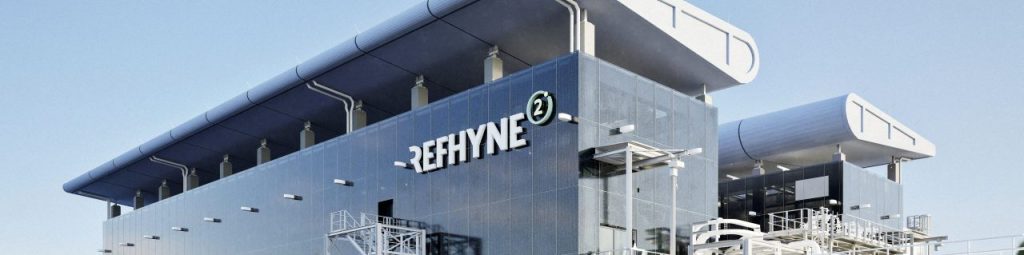
Shell Energy Europe has signed two power purchase agreements (PPAs) in Germany to secure renewable electricity for its REFHYNE 2 hydrogen electrolyser at the Shell Energy and Chemicals Park Rheinland. The agreements include a five-year deal with the 332 MW Nordsee One offshore wind farm, from which Shell will purchase about one-third of output, and a 10-year agreement with the 230 MW Halenbeck-Rohlsdorf solar project, covering around 75% of its generation.
The renewable power will supply the 100 MW REFHYNE 2 electrolyser when it becomes operational in 2027. The facility will produce renewable hydrogen to help decarbonise fuels, chemicals, and other energy products, while reducing Shell’s Scope 1 and 2 emissions at the site.
The project is supported by EU and German policies promoting renewable hydrogen and has received funding under the EU’s Horizon 2020 programme. REFHYNE 2 builds on the earlier REFHYNE 1 project and forms part of Shell’s broader strategy to scale up renewable hydrogen production across Europe.
BalticSeaH2 is building the largest cross-border hydrogen valley in Europe
30 September 2025
BalticSeaH2 is developing the first large-scale cross-border hydrogen valley between Southern Finland and Estonia, aiming to strengthen energy security and reduce emissions by building an integrated hydrogen economy across the Baltic Sea region. Hydrogen valleys link renewable electricity with energy, transport, and industrial uses, helping to cut dependence on imported fossil fuels while supporting climate goals.
Launched in 2023 for a five-year period, the €33 million project is co-funded by the EU’s Clean Hydrogen Partnership and brings together 40 partners from nine countries. It focuses on connecting local hydrogen production, distribution, and use, including green ammonia production for fertilisers and hydrogen transport, as well as applications in industry and mobility.
Beyond technological development, BalticSeaH2 promotes cross-border cooperation, coordinated regulation, and market development to enable large-scale investment. The project is expected to catalyse several billion euros in follow-up investments and serve as a model for how regional hydrogen value chains can be scaled up across Europe to support both decarbonisation and long-term energy security.
Scaling Europe’s hydrogen refuelling infrastructure: Inside the H2REF-DEMO Project
11 December 2025
The EU-funded H2REF-DEMO project will demonstrate advanced hydrogen compression and refuelling technology for heavy-duty vehicles in 2026, supporting Europe’s transition to a net-zero transport system. Coordinated by CETIM and running from 2023 to 2026, the project aims to deliver cost-effective, reliable hydrogen refuelling systems capable of meeting the high demands of heavy transport.
The project will test a full-scale prototype at a hydrogen refuelling station in Champagnier, France, achieving flow rates of up to 150 kg of hydrogen per hour at 350 bar with energy consumption below 3.5 kWh/kg. Through extensive real-world testing, H2REF-DEMO targets Technology Readiness Level 7, marking a step toward commercial deployment.
By replacing traditional mechanical compressors with an innovative hydraulic bladder accumulator system, the technology improves efficiency, durability, and reliability. Supported by Horizon Europe under the Clean Hydrogen Partnership, H2REF-DEMO is expected to reduce operating costs and energy use across hydrogen refuelling infrastructure, helping accelerate the decarbonisation of Europe’s heavy-duty transport sector.

Finland and the Netherlands Hydrogen Clusters Begin Cooperation – Goal to Accelerate Europe’s Hydrogen Economy
12 December 2025
The Finnish Hydrogen Cluster and the Dutch hydrogen association NLHydrogen have signed a cooperation agreement to strengthen collaboration between hydrogen stakeholders in Finland and the Netherlands. The partnership aims to accelerate the development of a sustainable, pan-European hydrogen economy by combining the complementary strengths of both countries’ hydrogen ecosystems.
Representing more than 130 companies and organisations combined, the two clusters will cooperate on technology development, value chain integration, policy advocacy, and market creation, with support from national governments and Business Finland. The agreement was signed during a Business Forum attended by senior Finnish and Dutch ministers.
Finland’s strong renewable electricity supply, grid connectivity, and access to biogenic CO₂ complement the Netherlands’ role as a major European energy hub with advanced hydrogen infrastructure and industrial applications. Together, the partners aim to enhance energy security, support Europe’s climate goals, and build a resilient European hydrogen value chain.
Link: https://fuelcellsworks.com/2025/12/12/hydrogen-economy/finland-and-the-netherlands-hydrogen-clusters-begin-cooperation-goal-to-accelerate-europe-s-hydrogen-economy
Commission invests €2.9 billion from the Innovation Fund to boost net-zero technology projects
3 November 2025
The European Commission has announced €2.9 billion in funding for 61 innovative net-zero technology projects under the EU Innovation Fund, financed by revenues from the EU Emissions Trading System. The projects, selected through the first IF24 call launched in December 2024, span 19 industrial sectors across 18 countries and focus on energy-intensive industries, renewable energy, energy storage, clean mobility, buildings, cleantech manufacturing, and industrial carbon management.
Together, the projects are expected to cut around 221 million tonnes of CO₂ equivalent during their first ten years of operation, supporting the EU’s goal of climate neutrality by 2050. Project developers will now begin grant agreement preparations with CINEA, with final contracts to be confirmed in the first half of 2026.
The call was heavily oversubscribed, attracting 359 applications requesting €21.7 billion—more than nine times the available budget—highlighting strong demand for EU support for decarbonisation. With this round, the Innovation Fund portfolio now exceeds 270 projects with €15.6 billion committed, and new calls are planned for December 2025.
Link: https://ec.europa.eu/commission/presscorner/detail/en/ip_25_2564
OMV and Masdar sign binding agreement to develop and operate new 140 MW green hydrogen plant in Austria
6 November 2025
OMV and Masdar have signed a binding agreement to establish a joint venture to finance, build, and operate a 140 MW green hydrogen electrolyser plant in Bruck an der Leitha, Austria. The joint venture will be majority-owned by OMV, with Masdar holding a 49% stake. Construction of the facility—one of the largest green hydrogen plants in Europe—began in September 2025, with operations expected to start in 2027.
The project will support OMV’s efforts to decarbonise its Schwechat refinery and accelerate the energy transition. OMV will procure the renewable electricity and own the green hydrogen produced, while Masdar brings its global expertise in developing and operating clean energy projects.
Beyond this project, the partnership lays the groundwork for broader cooperation in green hydrogen, synthetic sustainable aviation fuels (e-SAF), and synthetic chemicals across Europe and the UAE. The joint venture is expected to close in early 2026, subject to regulatory and shareholder approvals.
Europe hosts 571 MW of operational electrolysis capacity
1 October 2025
Europe’s operational water electrolysis capacity reached 571 MW by July 2025, up from 385 MW in September 2024, according to Hydrogen Europe’s 2025 Clean Hydrogen Monitor. An additional 2.84 GW of capacity is under construction, with 94% concentrated in eight countries, led by Germany. However, the EU’s target of 6 GW of electrolyser capacity by 2024 has not been met, and final investment decisions slowed to 517 MW during the past year.
The report projects a domestic clean hydrogen supply of 2.3 million tonnes by 2030, including 1.7 million tonnes of electrolytic hydrogen, despite a slight reduction in expected capacity due to lower utilisation assumptions. Costs are falling, with the average levelised cost of renewable hydrogen dropping to €7.1 per kg in the 2025 Hydrogen Bank auction, down from €8.4 per kg in 2024, with the lowest costs seen in Spain and Sweden.
Oil refining is currently the largest source of clean hydrogen demand due to regulatory incentives, while chemical and fertiliser producers face cost pressures and global competition. Hydrogen Europe warns that Europe risks missing its climate targets and falling behind globally unless policymakers strengthen implementation to support decarbonisation and energy resilience.
Link: https://renewablesnow.com/news/europe-hosts-571-mw-of-operational-electrolysis-capacity-1282499
$110 Billion Hydrogen Boom Meets Bureaucratic Bottlenecks in Europe
30 October 2025
Europe’s hydrogen industry is continuing to advance despite growing frustration over complex EU regulations, as highlighted during European Hydrogen Week in Brussels. Globally, more than $110 billion has been committed to low-carbon hydrogen, with over 500 projects reaching final investment decision, construction, or operation. Europe is expected to become the world’s largest demand centre for clean hydrogen, driven by binding mandates under the EU’s Renewable Energy Directive (RED III).
Major projects underline this progress, including RWE and TotalEnergies’ 300 MW green hydrogen plant in Germany, supplying hydrogen via pipeline to a refinery from 2030, and Shell’s 200 MW electrolyser project in Rotterdam. At the same time, industry leaders and partner countries such as India and Oman are calling for greater regulatory flexibility, arguing that strict EU rules on renewable hydrogen (RFNBO), particularly around additionality and time correlation of renewable electricity, are raising costs and delaying projects.
While EU mandates and quotas are creating demand and spurring investment in hydrogen pipelines and corridors across Europe, industry groups warn that unclear and overly stringent regulation risks slowing market development. Experts argue that faster demand incentives, clearer rules, stronger carbon pricing, and continued public support for infrastructure are essential to scale hydrogen production and build a resilient European hydrogen market that supports both decarbonisation and energy security.
Gascade Gastransport Launches Germany’s Longest Hydrogen Infrastructure Pipeline
15 December 2025
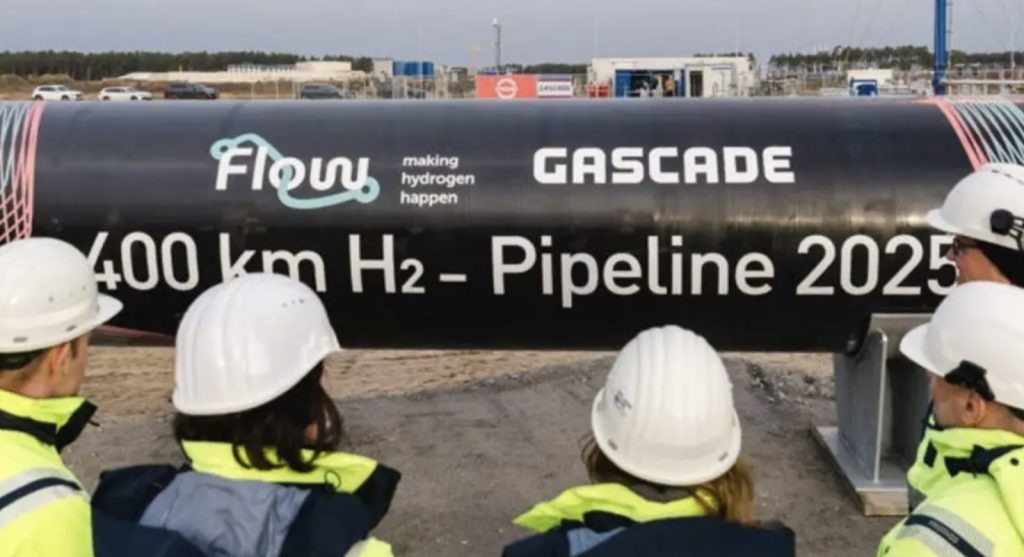
Gascade Gastransport has commissioned Germany’s longest dedicated hydrogen pipeline, a 400 km high-pressure line created by retrofitting existing natural gas infrastructure. The pipeline connects Baltic Sea ports in Rostock and Lubmin with major industrial and chemical hubs in Saxony-Anhalt, Leuna, and Leipzig, forming the first operational section of the planned 1,630 km Flow hydrogen network within Germany’s future 9,000 km hydrogen core system.
The pipeline is now ready to transport pure green hydrogen, supporting up to 20 GW of renewable hydrogen production and enabling long-term offtake agreements with steel and chemical companies. By reusing existing pipelines, Gascade reduced capital costs by up to 30% compared with building new infrastructure, with financing supported by Germany’s National Hydrogen Strategy, EU IPCEI funding, and private investment.
Strategically, the project strengthens Europe’s energy security, reduces reliance on fossil gas imports, and accelerates industrial decarbonisation in line with EU initiatives such as Fit for 55 and REPowerEU. It also serves as a scalable model for cross-border hydrogen corridors, with planned future connections to neighbouring countries and further expansion across Germany.