
How Africa can ensureit profits from the green hydrogen boom
By 2050, African green hydrogen could meet 5–10% of global hydrogen demand. But powering industry and boosting energy access need attention.
Africa has the potential to become a major global green hydrogen (GH₂) producer, supplying an estimated 5–10% of global demand by 2050, driven by exceptional solar and wind resources that enable some of the world’s lowest production costs. Countries such as Namibia, South Africa, Morocco, Egypt, and Mauritania could collectively produce 30–60 million tonnes of GH₂ annually, generating up to USD 120 billion in GDP. While growing EU–Africa partnerships position the continent as a strategic supplier for global decarbonisation, realising long-term benefits requires more than export-oriented development. Significant investment in energy and infrastructure is needed, alongside policy frameworks that prioritise local industrialisation, workforce development, technology transfer, and downstream value creation in sectors such as green steel and fertilisers. Without deliberate strategies aligned with Africa’s Agenda 2063 and the EU’s Clean Industrial Deal, Africa risks repeating extractive models seen in fossil energy systems. With coordinated governance, skills development, and inclusive industrial policies, green hydrogen can support both global climate goals and sustainable economic transformation across the continent.
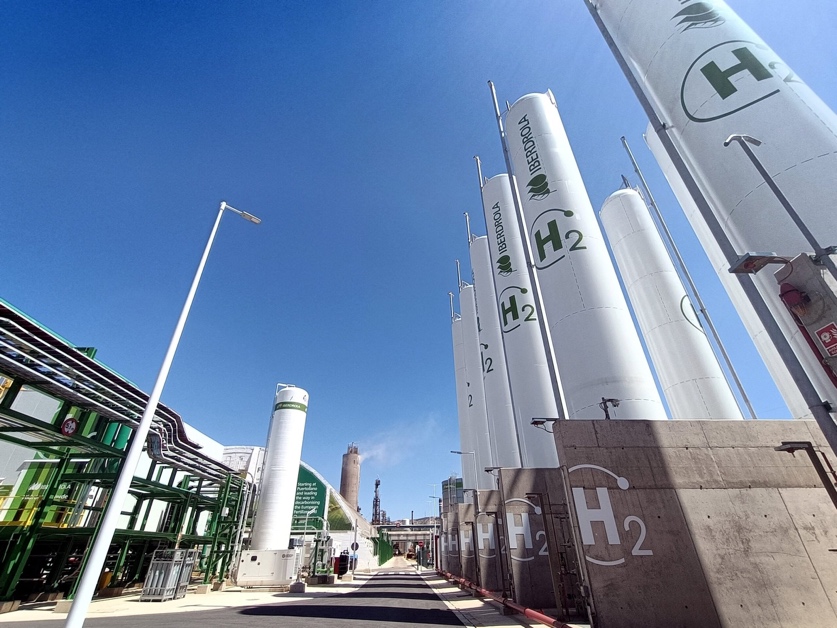
Europe’s push for hydrogen diverts solar and wind potential from Africa
Recent analysis by Global Energy Monitor highlights that Africa’s rapidly expanding green hydrogen (GH₂) pipeline—amounting to 216 GW across 35 projects in 11 countries—faces substantial technical, financial, and market-related uncertainties. Nearly two-thirds of Africa’s proposed utility-scale wind and solar capacity is earmarked for green hydrogen production primarily for export to Europe, despite the absence of a mature hydrogen import market and limited confirmed offtake agreements. These projects are often unprecedented in scale relative to host countries’ existing energy infrastructure, raising concerns about unrealistic timelines, lack of funding, insufficient transmission and transport infrastructure, water scarcity, and the risk of stranded assets. While hydrogen deployment remains largely hypothetical, small and distributed renewable energy projects—such as solar minigrids and community-scale installations—have already demonstrated tangible benefits for energy access, income generation, and local development across the continent. The current export-oriented hydrogen strategy risks diverting capital and policy attention away from proven electrification solutions and domestic energy needs, potentially reproducing extractive energy models unless stronger governance, transparency, local ownership, and prioritisation of community-centred energy access are embedded in future development pathways.
African Development Bank Approves $10 Million to catalyse Namibia’s Large Green Hydrogen Project
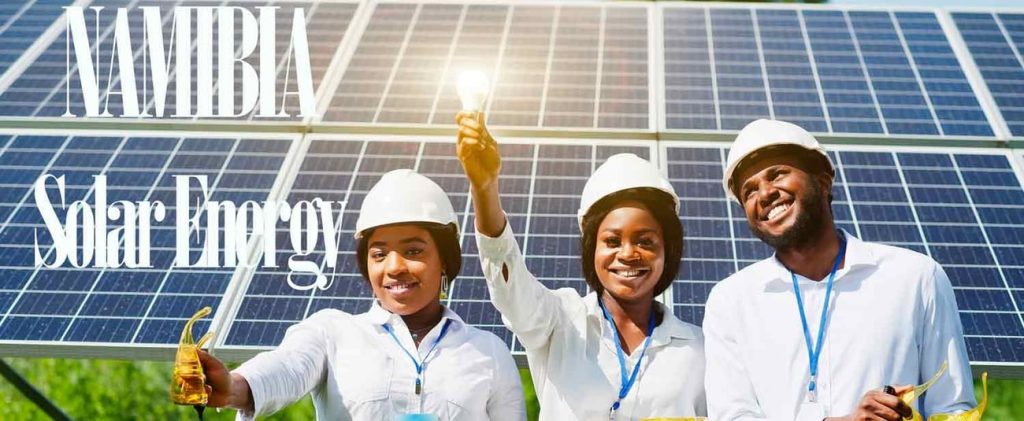
African engineers at a solar panel station
The African Development Bank has approved a USD 10 million SEFA loan to Hyphen Hydrogen Energy to support front-end engineering and de-risking activities for Namibia’s USD 10 billion green ammonia project. The project’s first phase includes 3.75 GW of renewable energy generation, 1.5 GW of electrolyser capacity, battery storage, and supporting infrastructure such as desalination and port facilities. Once operational, it is expected to produce 2 million tonnes of green ammonia annually for export, avoid 5 million tonnes of CO₂ emissions per year, deploy renewable capacity exceeding ten times Namibia’s current installed base, and supply up to 3 million litres of desalinated water daily to the Lüderitz region. The project is projected to create 15,000 construction jobs and 3,000 permanent positions, positioning Namibia as a flagship green hydrogen hub and a leading contributor to Africa’s energy transition.
Chemical Industries Holding launches green hydrogen projects in partnership with global investors: El-Shimy

Egypt’s Minister of the Public Enterprises Sector, Mohamed El-Shimy, announced that the Chemical Industries Holding Company is advancing multiple green hydrogen and derivatives projects in partnership with international investors, in line with Egypt’s strategy to localize industry and strengthen sustainable value chains. Speaking at the Third International Hydrogen in Africa Conference in Cairo, El-Shimy highlighted Egypt’s early leadership in clean energy, noting that Kima Aswan has produced green hydrogen for ammonia using hydroelectric-powered electrolysis since 1960—the first such experience in Africa. He emphasized Egypt’s ambition to become a regional clean energy hub, supported by strong solar and wind potential, a strategic location along the Suez Canal, and a robust framework of legislative and investment incentives. El-Shimy underscored the importance of Egypt–Germany cooperation and reaffirmed Egypt’s commitment to transparent governance, international partnerships, and inclusive development in the transition toward a green hydrogen economy.
Germany, Netherlands, Czech Republic Back Morocco’s Green Hydrogen Push
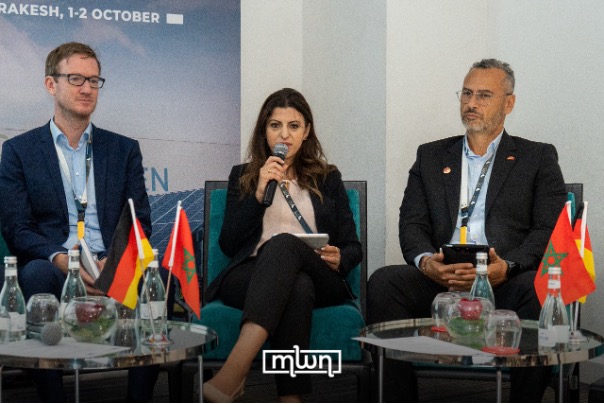
At the fifth Power-to-X Summit held in Marrakech on October 1–2, Morocco positioned itself as a future green hydrogen supplier to Europe, highlighting progress under its National Hydrogen Strategy and growing partnerships with Germany, the Netherlands, the Czech Republic, France, and Spain. Backed by the EU-Morocco Green Partnership and the “Morocco Offer” investment program—mobilizing over MAD 319 billion and reserving up to one million hectares of land—the country has pre-selected investor consortia for large-scale green ammonia, e-fuels, and green steel projects, with green ammonia for OCP’s fertilizer value chain as an anchor use-case. European partners view Morocco as a priority hydrogen supplier to meet long-term import needs, while cooperation focuses on bankability, offtake, certification, ports, and export readiness. Alongside export ambitions, pilot projects, innovation programs, and skills development initiatives aim to strengthen local industrial capacity, positioning Morocco as a key hub in the emerging Euro-Mediterranean green hydrogen economy.
Africa’s Energy Challenge: From Gas to Hydrogen, Moving Towards a Hybrid Hub
Africa stands at a pivotal moment in its energy transition, endowed with significant natural gas reserves and exceptional renewable resources that could support energy security, industrialization, and decarbonization. While large-scale gas and green hydrogen projects signal strong ambition, many remain at early planning stages, constrained by financing gaps, security concerns, and uncertain offtake arrangements. Natural gas—through LNG expansion and regional pipelines such as the Nigeria–Morocco Atlantic Gas Pipeline and the Trans-Saharan Gas Pipeline—continues to anchor Africa’s energy strategy, though execution risks persist. In parallel, green hydrogen initiatives in countries such as Morocco, Egypt, Namibia, and South Africa are emerging but largely depend on creating bankable project structures supported by regulatory stability, infrastructure, and blended finance mechanisms. Addressing cross-cutting challenges related to financing, security, regional integration, and ESG compliance will be essential to move beyond announcements toward implementation. By integrating gas, renewables, and hydrogen with local industrial value chains and aligning projects with regional markets and Agenda 2063, Africa can position itself as a competitive and sustainable gas–hydrogen hub rather than repeating extractive export-driven models.
Link: https://www.financialafrik.com/en/2025/10/16/africas-energy-challenge-from-gas-to-hydrogen-moving-towards-a-hybrid-hub/
Policy & Projects Could Drive African Low-Carbon Hydrogen Towards 50 MTPA by 2035

Africa is rapidly emerging as a significant player in the global low-carbon hydrogen economy, supported by abundant renewable energy resources and growing international demand. According to the African Energy Chamber’s State of African Energy 2026 Outlook, the continent could produce up to 50 million tonnes of low-carbon hydrogen annually by 2035, serving both domestic needs and export markets. Large-scale projects are advancing across North, Southern, and West Africa, including Egypt’s multi-billion-dollar green hydrogen strategy, EU-backed export corridors linking North Africa to Europe, Namibia and South Africa’s national hydrogen programs, and GW-scale developments in Mauritania. While financing, infrastructure, and regulatory barriers continue to limit domestic consumption, rising demand from heavy transport, maritime shipping, industry, and sustainable fertilizer production presents new growth pathways. With targeted policies, strong investment frameworks, and international partnerships, hydrogen could become a catalyst for Africa’s industrialization, energy transition, and long-term economic resilience.
Link: https://aecweek.com/policy-projects-could-drive-african-low-carbon-hydrogen-towards-50-mtpa-by-2035/
Algeria: joins African Green Hydrogen Alliance (AGHA)
On September 11, 2025, Algeria joined the African Green Hydrogen Alliance (AGHA) during the African Green Hydrogen Summit in Windhoek, Namibia, aligning with its national strategy to develop green hydrogen, diversify the economy, and leverage renewable energy resources. The membership strengthens inter-African cooperation and provides Algeria with access to training programs, technical expertise exchange, and continent-wide investment opportunities in the green hydrogen sector.
Link: https://africa-news-agency.com/algeria-joins-african-green-hydrogen-alliance-agha/
CMB.TECH celebrates launch of Africa’s first integrated green hydrogen plant
Belgian shipping group CMB.TECH has inaugurated Africa’s first integrated green hydrogen plant with the opening of Cleanergy Solutions Namibia, developed in partnership with Ohlthaver & List and officially launched by Namibia’s Prime Minister, Dr Elijah Ngurare. The facility includes a solar-powered, off-grid electrolyser producing green hydrogen, refuelling infrastructure for vehicles and industrial use, and a hydrogen academy for local skills development. Positioned as a model for sustainable energy and African–European cooperation, the project is set to expand into rail and maritime applications from 2026, including the deployment of a dual-fuel hydrogen harbour vessel at Walvis Bay port.
Link: https://splash247.com/cmb-tech-celebrates-launch-of-africas-first-integrated-green-hydrogen-plant/
EU Pledges €11.5B to Boost South Africa’s Green Energy and Hydrogen Transition

The European Union has announced a €11.5 billion investment package for South Africa aimed at accelerating the clean energy transition, with a strong focus on renewable power, grid modernization, energy storage, and the scale-up of green hydrogen production. Central to the initiative is the Coega Green Ammonia Project, identified as a priority to meet rising demand for low-carbon ammonia across agriculture, mining, and chemical industries, in line with South Africa’s Integrated Resource Plan. The investment also supports broader infrastructure and industrial development as South Africa confronts economic pressures from rising unemployment, trade tariffs, and declining export opportunities. Framed as part of the EU’s wider partnership with African countries on energy security, climate goals, and industrial development, the package underscores the strategic role of green hydrogen in South Africa’s economic recovery and long-term decarbonization pathway.
Hive Hydrogen Wins Approval for 1GW Carissa Wind Farm, South Africa’s Largest Permitted Facility for Green Hydrogen
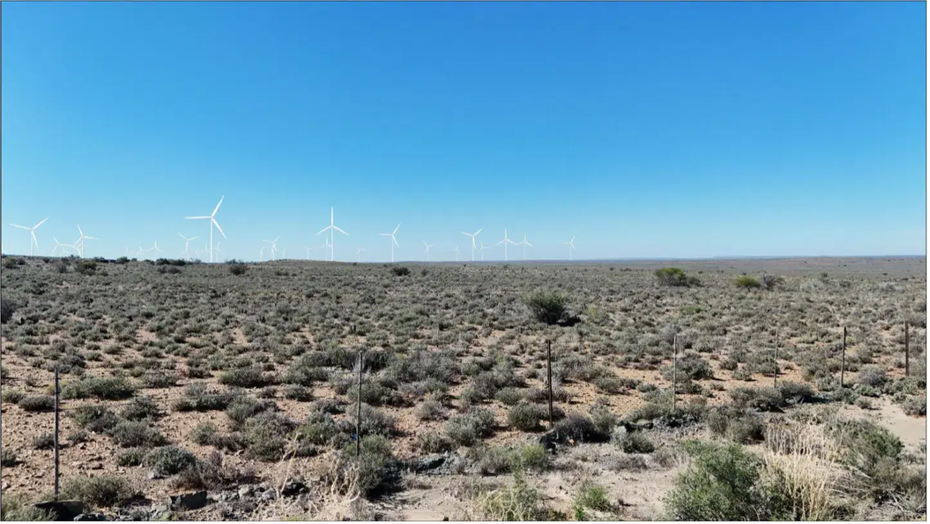
The Carissa Wind Energy Facility near Beaufort West in South Africa’s Western Cape has secured Environmental Authorisation (EA), marking a major milestone in the country’s renewable energy and green hydrogen transition. With a permitted capacity of up to 1,000 MW across 154 turbines, it is now the largest approved wind energy facility in South Africa and will supply clean power to the Coega Green Ammonia project in Nelson Mandela Bay. The approval follows a rigorous Environmental Impact Assessment led by Blue Crane Environmental in partnership with Hive Hydrogen and AMDA Developments, supported by extensive public consultation and endorsed by the Department of Forestry, Fisheries and the Environment under Strategic Infrastructure Project status. The milestone enables the Coega Green Ammonia project to proceed to front-end engineering design, positioning South Africa as a significant player in the global green hydrogen and sustainable ammonia market.
TUT Engineer Breaks Ground in Hydrogen Storage Technology

Dr Douw Faurie is advancing South Africa’s clean energy transition through a breakthrough in hydrogen storage technology developed during his doctoral research at the Tshwane University of Technology. His work focuses on metal hydride reactors, bridging the gap between laboratory experiments and real-world applications by integrating advanced computational modelling and machine learning. Faurie’s doctoral thesis introduced a digital twin–based neural network model capable of accurately predicting reactor behaviour while remaining computationally efficient, improving the safety, viability, and cost-effectiveness of hydrogen storage systems. Supported by collaborations with the University of the Western Cape, the research has already resulted in peer-reviewed publications and demonstrates strong academic and industrial relevance. By addressing long-term hydrogen storage challenges, the work supports South Africa’s hydrogen ambitions, leverages its platinum group metal resources, and contributes to UN Sustainable Development Goal 7 on affordable and clean energy.
1,400,000 kg hidden below — Africa may hold the key to ending gas and oil forever
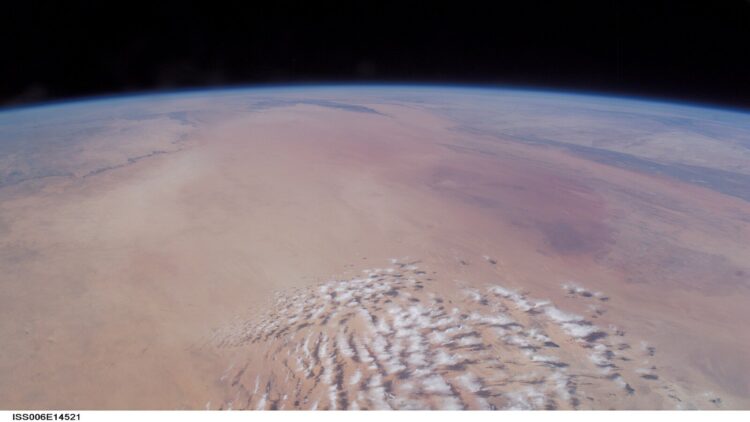
Recent geological findings suggest the presence of naturally occurring hydrogen reservoirs beneath parts of Africa, raising interest in a potential new clean energy pathway distinct from fossil fuels. This “natural” or geological hydrogen forms when iron-rich rocks react with water underground, releasing hydrogen gas that can accumulate in subsurface reservoirs, as observed in Mali and similar geological settings. Scientists now believe this process may be more widespread and partially self-replenishing, making it a potentially renewable energy source. Given Africa’s abundant suitable geology and rapidly growing energy demand, natural hydrogen could offer a low-emission complement to renewable electricity, reducing reliance on complex industrial hydrogen production chains. While significant uncertainties remain regarding resource size, extraction feasibility, governance, and environmental management, the discovery highlights Africa’s potential to play a leading role in emerging clean energy systems if development is pursued transparently and sustainably.
Link: https://www.ecoportal.net/en/1400000-kg-hidden-below-africa-hydrogen/13896/
Why Nearly Two-Thirds of Africa’s New Renewables Target Green Hydrogen Export, and The Impact on Local Energy Justice
Africa is rapidly scaling up utility-scale solar and wind deployment. Yet, nearly two-thirds of its prospective renewable pipeline is currently earmarked for green hydrogen exports rather than domestic power systems. This creates a pivotal moment at which export-driven projects could either finance a just energy transition or divert clean energy away from the more than 600 million Africans who still lack access to electricity. Driven by strong global demand signals—particularly from Europe and Asia—green hydrogen investment is accelerating in countries such as Mauritania, Namibia, and Morocco, where flagship projects coexist with weak grids, water stress, and unresolved land and consent issues. Ensuring positive outcomes will require deliberate project design that reserves domestic offtake, co-finances grid expansion, manages water sustainably, and embeds community benefits through transparent governance and Free, Prior and Informed Consent. If structured as shared infrastructure for power, water, and local industry, Africa’s hydrogen boom can simultaneously support exports and electrification; if not, it risks reinforcing energy inequality despite unprecedented renewable potential.
Link: https://www.intelligentliving.co/africa-new-renewable-hydrogen-export/
Green energy frontier in Africa revealed — 200,000 tons near the coast set to outshine Russia
Morocco is advancing a large-scale green hydrogen and ammonia project on its Atlantic coast that could reshape Africa–Europe clean energy links. The Chbika project in the Guelmim–Oued Noun region plans to deploy 1 GW of solar and wind power to produce hydrogen from desalinated seawater and convert it into around 200,000 tonnes of green ammonia annually, primarily for export to Europe. Backed by major international investors including TotalEnergies, Copenhagen Infrastructure Partners, and A.P. Møller Capital, the project leverages Morocco’s strong renewable resources, coastal location, and established ammonia logistics to offer Europe a low-carbon alternative to fossil fuel imports. Beyond energy production, Chbika aims to establish an integrated port and export infrastructure, positioning Morocco as a strategic hub in the emerging global green hydrogen and green ammonia market while highlighting Africa’s growing role in the clean energy transition.
Link: https://www.ecoportal.net/en/green-energy-frontier-africa-revealed/14123/
Namibia opens solar-powered green hydrogen hub
Namibia has commissioned its first large-scale, solar-powered green hydrogen facility in Walvis Bay, marking a significant step toward positioning the country as a hub in emerging global green maritime corridors. Developed by Cleanergy Solutions Namibia, the project integrates a 6.5-hectare solar park, a 5 MW PEM electrolyser, a 5.9 MWh battery energy storage system, a public hydrogen refuelling station, and a dedicated Hydrogen Academy, combining production, distribution, end-use, and skills development at a single site. The facility will supply green hydrogen to trucks, port equipment, rail applications, and small vessels, with plans to support ammonia production for maritime shipping. Backed by Namibian–European collaboration and supported by the EU’s Global Gateway strategy, the project underscores Namibia’s ambition to develop domestic industrial capacity, create skilled employment, and scale green hydrogen and ammonia production for regional and international markets.
Link: https://www.esi-africa.com/news/namibia-opens-solar-powered-green-hydrogen-hub/
3GW Namibian green hydrogen and ammonia plant secures $10m African bank loan
The African Development Bank has approved a USD 10 million loan from its Sustainable Energy Fund for Africa to support front-end engineering and pre-investment activities for Hyphen Hydrogen Energy’s flagship green hydrogen and ammonia project in Namibia. The 3 GW project, targeting final investment decision in 2026, includes 7.5 GW of renewable generation, 3 GW of electrolysis capacity, and desalination and export infrastructure, with plans to produce up to one million tonnes per year of green ammonia by 2028. Located on concessioned land within the Tsau Khaeb National Park, the project also aims to supply excess power and desalinated water to local communities and to double capacity after 2030. AFDB officials described the initiative as a strategic, high-impact investment that could unlock billions in financing, support job creation, and position Namibia as a leader in the global green hydrogen transition.